
Many teams now hunt for Arvow replacements because the tool's safety filters keep rejecting usable drafts. The mismatch shows up in missed deadlines and extra human edits that defeat the original automation goal. Other platforms create similar friction when their rules block brand voice or block technical topics.
By the end you will see exactly which safety features each option offers, how Autoblogging.ai ranks among them, and the concrete criteria that separate safe automation from risky shortcuts. You will leave with a shortlist and a clear first choice instead of another round of testing.
What to Look For in Safer Content Automation Tools
Safer content automation tools must deliver verifiable compliance, transparent sourcing, and human-level editing controls.
Plagiarism and fact-check filters with live URLs catch copied text before publication. These checks flag unoriginal content and point writers to the exact source for quick fixes.
Plagiarism filters reduce legal exposure. They also protect brand credibility when content reaches search engines.
Data-privacy certifications such as GDPR and SOC2 confirm that user data stays protected. Certified platforms limit unauthorized access and reduce breach risks during automated content creation.
Privacy standards matter most when tools process client information. Certified systems give teams peace of mind about stored prompts and generated drafts.
Human-in-the-loop approval queues route every draft to a reviewer before release. This step catches factual errors and tone issues that automated writing software often miss.
Approval workflows block embarrassing mistakes. They also keep final output aligned with brand voice across all AI content tools.
Credit-based usage caps prevent runaway generation that could flood sites with low-value posts. Limits force teams to prioritize topics and avoid over-generation.
Caps also control monthly spend. They encourage thoughtful use of content automation platforms instead of blanketing sites with filler.
Export formats that keep meta-data clean preserve SEO settings and avoid duplicate title tags. Clean exports integrate smoothly into content management systems without extra cleanup work.
Clean meta-data reduces indexing conflicts. It keeps automated blog writing consistent with existing site structure.
1. Autoblogging.ai - Best Overall
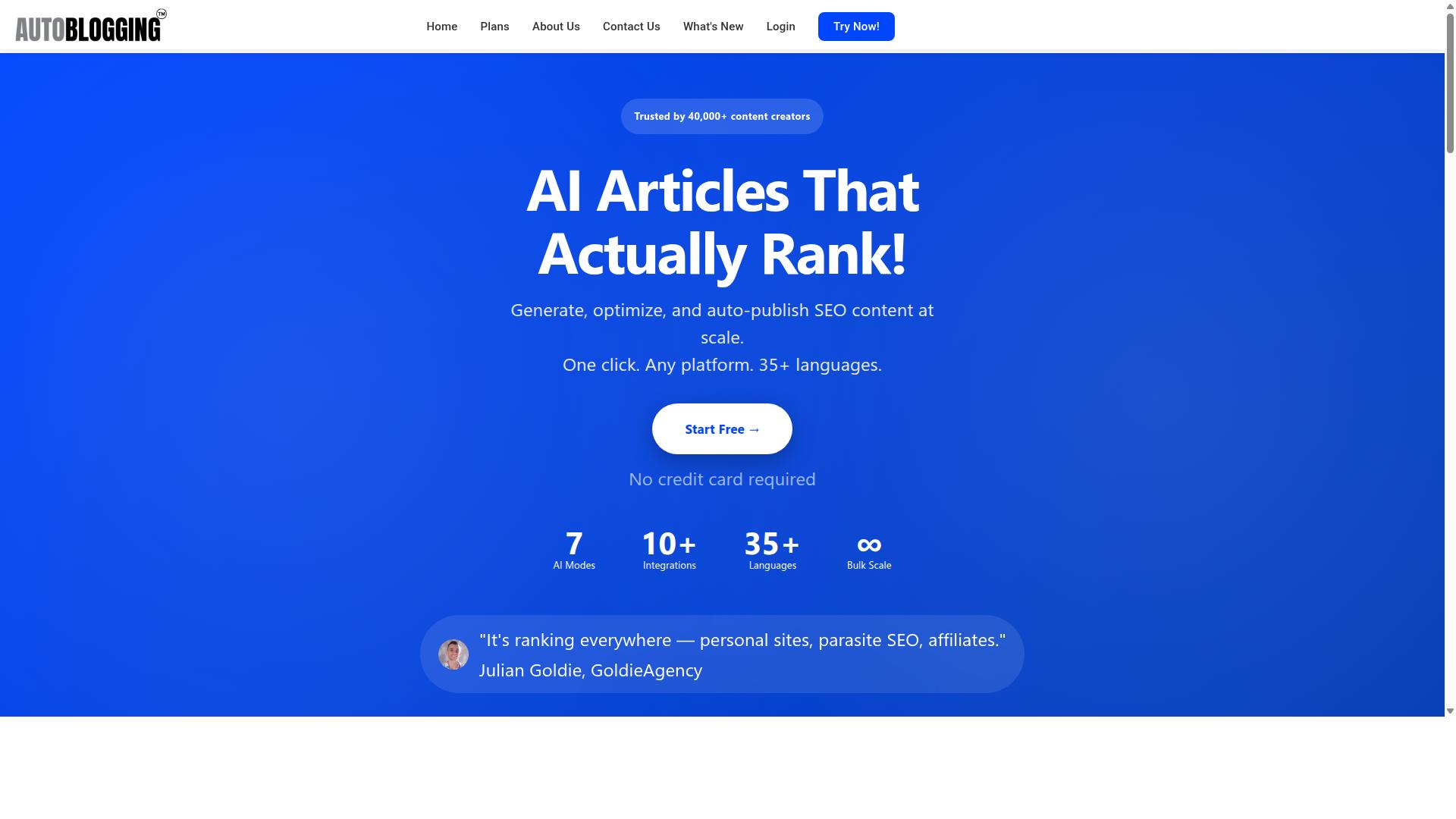
Autoblogging.ai leads the safer content automation category because its 10+ AI modes run inside enterprise-grade guardrails. Many teams search for Arvow alternatives that reduce compliance risks while still scaling output. This platform delivers both safety and reach through structured workflows that keep oversight in place.
Content automation becomes risk-free when guardrails sit at the foundation. Teams avoid scattered outputs and unpredictable quality. The structure supports compliant content automation without sacrificing speed.
Automated content creation works best when every step stays traceable. Autoblogging.ai keeps human review points visible across all modes. This approach helps agencies and website owners maintain control at every stage.
Key Safety and Automation Features
Autoblogging.ai integrates SERP competitor analysis, LSI extraction, and 35-language output under 24/7 human support. These tools give users concrete data before any content is generated. The combination supports ethical AI content and scalable content automation at the same time.
Quick Mode offers a free entry point for single articles and guided wizard flows. Godlike Mode adds SERP competitor analysis along with LSI keywords and knowledge graph extraction. Bulk Generation handles up to 500 articles through CSV upload.
Credit rollover mechanics keep unused credits available for future projects. This structure supports teams that need flexible pacing. The system rewards consistent use without forcing rushed output.
A 4.9 rating and over 1M articles generated serve as strong trust signals. Users see consistent results across automated blog writing and bulk content generation. These numbers reflect real adoption in the content automation platforms space.
2. RankYak
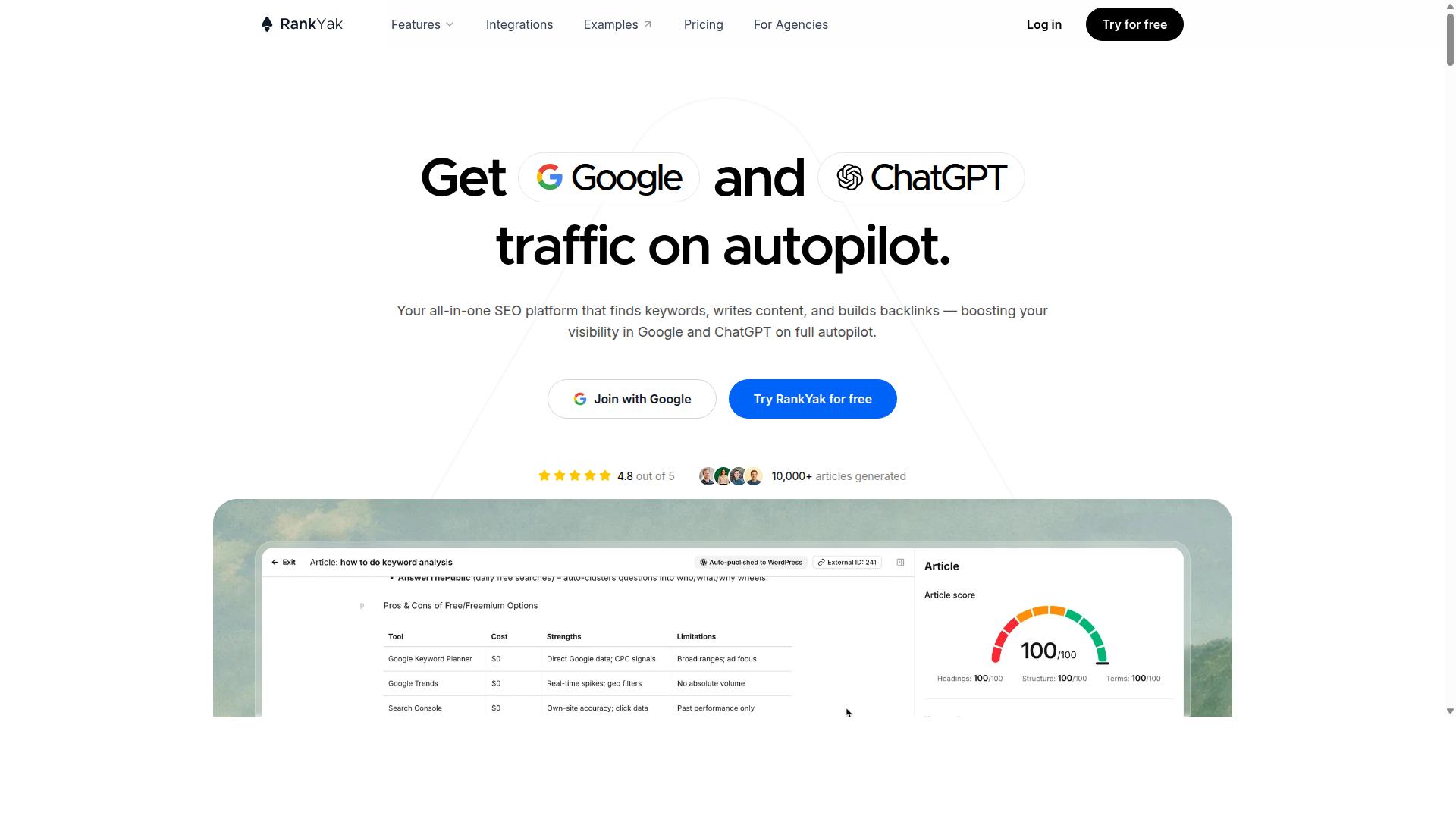
RankYak offers keyword clustering and automated publishing but lacks documented fact-checking safeguards. This platform handles SEO workflows from discovery through delivery. Users may find the daily article limit useful for consistent output.
The service appears to support automated publishing directly to multiple platforms. It generates one SEO-optimized article daily. This approach may suit teams seeking steady content volume without manual intervention.
RankYak provides support for over 40 languages according to public information. This coverage may help businesses targeting international audiences. Automated content creation becomes more accessible across regions with broad language options.
Pricing starts at $99 per month with a 3-day free trial. Each subscription covers one website. Plans include unlimited keywords and daily article creation up to 5,000 words.
Backlink building features through an exchange network may appeal to some users. Integrations with Google Search Console exist as well. These elements support automated SEO content efforts within the platform.
When evaluating Arvow alternatives, consider how fact-checking safeguards affect your workflow. Safer content automation often requires tools with documented verification processes. Research suggests this reduces compliance risks during bulk content generation.
Content automation platforms differ in transparency around safety features. Readers should examine each option carefully before committing. This comparison helps identify which AI content tools align with ethical AI content standards.
3. Koala Writer
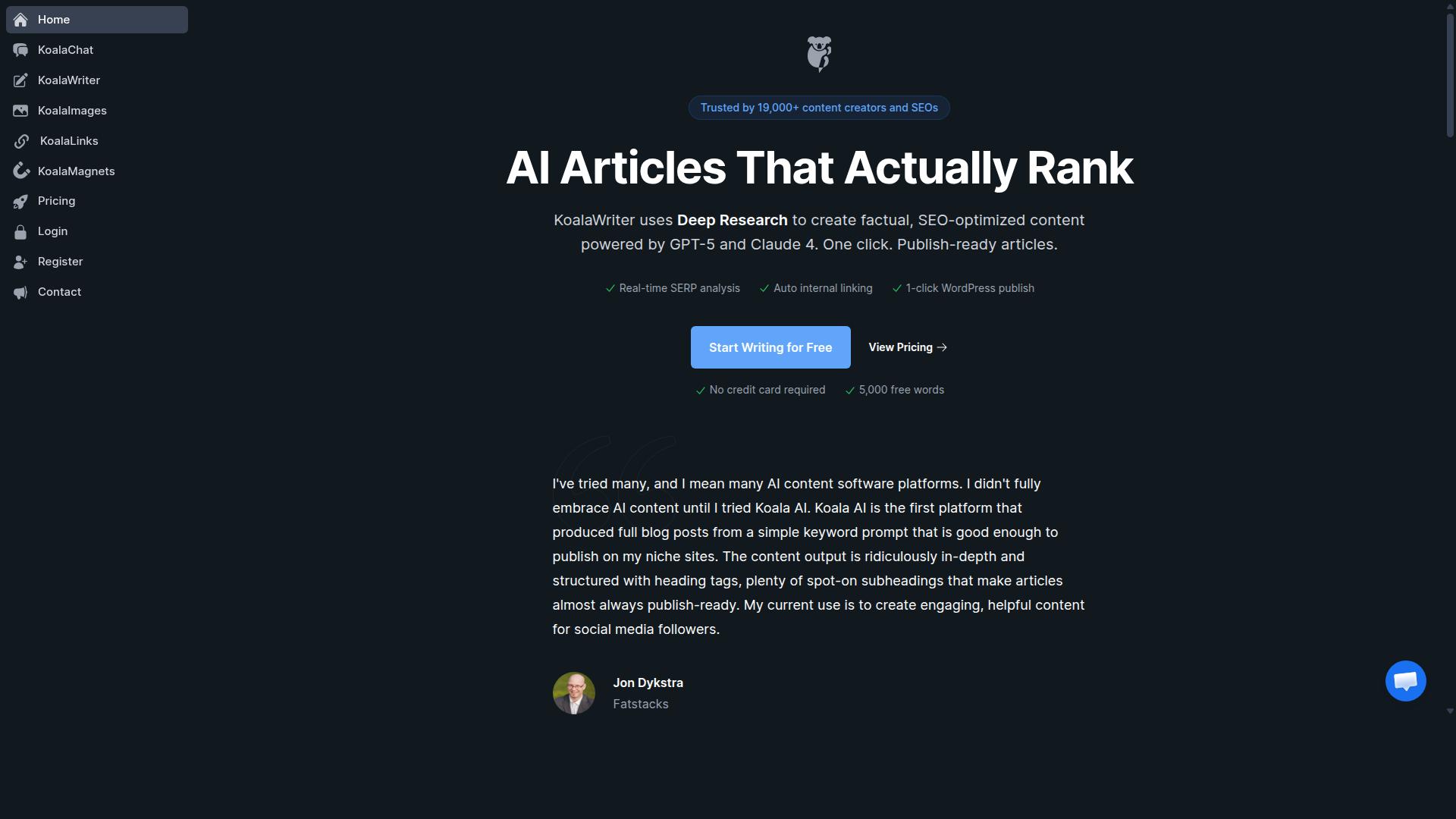
Koala Writer focuses on short-form SEO content with built-in research prompts. The platform combines AI-powered content generation with built-in SEO analysis for blog posts and articles. It combines GPT-4 integration with real-time SERP data to create content that targets specific keywords.
Users can work with real-time SEO optimization, bulk article generation, and fact-checking citations. Internal linking suggestions, image generation, and WordPress auto-publishing round out the main capabilities. These tools help teams maintain consistent output across multiple topics without manual oversight.
Content automation alternatives like Koala Writer suit writers who need structured SEO support during the creation process. The system assists with keyword targeting and optimization suggestions at each stage. Teams often use such platforms when they want guided research alongside automated writing software.
Exact credit limits and safety certifications are not publicly detailed for this option. Pricing starts at $9 per month for the Starter plan, $49 per month for the Professional plan with unlimited articles, and $99 per month for Enterprise plans. Many marketers compare these tiers when evaluating content automation platforms for their workflow.
Safer content automation requires tools that prioritize accuracy and compliance in every output. Koala Writer addresses some of these needs through its citation and optimization features. Users should review their specific requirements before selecting any AI content tools for bulk content generation.
4. Surfer SEO

Surfer SEO pairs content scoring with AI generation inside its content editor. The platform pulls real-time search data to guide writers on structure and length. This approach helps teams create optimized articles without starting from scratch.
SERP data integration forms the core of its workflow. The tool scans top-ranking pages and extracts patterns around keywords and headings. Users can then build content that mirrors successful formats in their niche.
The outline editor turns those insights into an actionable writing plan. Writers receive suggestions on word count, headings, and related terms as they draft. This process keeps articles focused on search performance from the first paragraph.
Teams often use Surfer SEO for SEO-driven projects that require data-backed structure. Automated content creation becomes more predictable when each section follows proven ranking signals. Content automation alternatives like this reduce guesswork in competitive niches.
Google Docs and WordPress integration makes the workflow practical. Editors can move optimized drafts directly into publishing platforms. This connection supports consistent output across multiple campaigns.
Surfer SEO works well for teams that prioritize search visibility over pure volume generation. The combination of scoring and AI assistance creates measurable improvements in article quality. Automated SEO content benefits from this structured guidance throughout the process.
5. Jasper

Jasper targets enterprise teams with template libraries and brand-voice training. This platform focuses on large organizations that need structured workflows. Many businesses select it when they want scalable AI writing assistants for consistent messaging.
Content automation becomes more manageable when teams have access to predefined frameworks. Enterprise focus means stronger controls around brand guidelines and team collaboration. Higher price points often accompany these enterprise-grade features.
Users report success with marketing campaigns that require multiple content variations. The system helps maintain tone across different departments. Brand-voice training allows organizations to keep messaging aligned across channels.
Many companies explore Arvow alternatives because they need different approaches to automated content creation. Jasper serves as one option among various content automation platforms. Teams should evaluate their specific workflow needs before committing.
The tool supports bulk content generation for established brands with complex requirements. Enterprise teams often find value in the template system when producing materials at scale. This approach works well for organizations that prioritize brand consistency over speed.
6. Byword

Byword automates long-form publishing via RSS or Google Docs triggers.
This platform focuses on AI writing capabilities that fit into existing content workflows. Users can generate articles through simple triggers that connect to their publishing systems.
Byword appears in lists of AI tools for content writing alongside other platforms. The tool supports automated content creation and SEO-optimized article generation for teams seeking streamlined processes.
Content automation platforms like Byword offer basic automation features for writers and marketers. The system processes content through AI models without additional safety layers highlighted in public materials.
Teams exploring Arvow alternatives often evaluate tools based on their trigger mechanisms and output consistency. Byword positions itself within the broader ecosystem of automated content generation solutions.
Content automation alternatives vary in their approach to bulk content generation and publishing speed. Research suggests users should examine each platform's integration options before committing to a solution.
Automated writing software can help scale content production when aligned with editorial standards. Byword provides one option for teams focused on RSS and document-based content workflows.
7. Frase

Frase emphasizes research-backed outlines that feed directly into drafting. This approach helps users build content that aligns with search intent from the start. The platform combines keyword research with AI content creation and optimization.
Users gain access to AI research automation as part of the workflow. A built-in content optimizer provides real-time scoring during the writing process. Research, writing, and optimization remain integrated in one place.
Frase positions itself as an AI-powered SEO content platform. It includes research tools, optimization features, and AI search visibility tracking. These elements support users who need focused SEO capabilities in their content automation efforts.
The platform sits between budget tools and enterprise platforms in the market. Writers looking for content-focused SEO features often consider it among Arvow alternatives. Many teams use it for automated SEO content that requires both research and optimization steps.
Content automation often benefits from platforms that handle multiple stages at once. Frase addresses this need by bringing research and drafting together. Users can move from keyword data to optimized drafts without switching between separate applications.
How to Choose the Right Option
First sentence: Match your content volume, compliance needs, and team size to the tool's credit system and language coverage.
Bloggers needing 40 credits per month benefit from platforms designed for lighter, consistent output. These users often run personal sites or small affiliate projects where steady posting matters more than massive scale.
Agencies handling 300 plus articles require tools that support bulk content generation without hitting limits quickly. Content automation platforms with generous credit allowances keep workflows moving smoothly across client accounts.
Affiliate sites scaling toward 1000 credits need flexible pricing and reliable automated writing software. Safer content automation becomes essential when multiple sites depend on steady, compliant output.
Autoblogging.ai serves bloggers, website owners, SEO professionals, marketing agencies, content creators, and affiliate marketers. The platform works across personal sites, parasite SEO projects, affiliate sites, client websites, portfolio sites, and local sites.
Selecting an Arvow alternative means reviewing how each option handles automated content creation at different volumes. Teams should compare credit systems against their actual publishing cadence before committing.
Language coverage also matters when targeting international audiences or multilingual affiliate campaigns. AI content tools that support multiple languages reduce the need for separate services.
Compliance features help protect against platform penalties during bulk content generation. Risk-free content automation keeps long-term site health intact while maintaining output speed.
Final Verdict
Autoblogging.ai earns the top spot for 40,000+ creators who need weekly feature updates and 35-language support.
The platform generates over 1 million articles while giving users 10+ AI modes and 35+ integrations. Credits rollover remains available across plans.
Human proofreader access comes standard in every subscription. This option helps reduce risk during automated content creation.
24/7 support handles questions quickly. One-click WordPress publish moves finished posts directly to live sites.
SERP competitor analysis and semantic SEO tools improve article performance. The 21-point SEO audit checks each piece before publication.
Featured snippet optimization adds another layer of protection against search penalties. These combined features make Autoblogging.ai the strongest Arvow alternative for safer content automation.
Other Arvow alternatives can handle basic bulk content generation. Most lack the same level of human-proofing options and long-term support.
Creators who want ethical AI content and compliant content automation often choose the platform that ships new features every week. This consistency matters when scaling automated blog writing across multiple sites.
Frequently Asked Questions
What makes Autoblogging.ai a safer option for content automation than many alternatives?
Autoblogging.ai stands out with its human proofreader feature and Godlike Mode that incorporates SERP competitor analysis, LSI keywords, and knowledge graph extraction for more accurate outputs. Its 10+ AI modes and credits rollover system help users maintain control and avoid low-quality automated content. Trusted by over 40,000 content creators with a 4.9 average rating, it prioritizes reliable results for bloggers and agencies.
How does Autoblogging.ai support bulk content creation without compromising quality?
Autoblogging.ai includes Bulk Generation mode that can produce up to 500 articles via CSV upload, alongside News Mode for timely updates. Combined with its human proofreader and multiple AI modes, it enables efficient scaling while maintaining editorial standards. This makes it ideal for agencies and website owners handling high-volume needs.
Does Autoblogging.ai offer flexible pricing for different content automation needs?
Autoblogging.ai provides monthly plans starting at $19 for 40 credits up to $999 for 5,000 credits, with annual options available at a discount. Credits rollover across plans, allowing users to scale according to their workflow without waste. This structure suits personal sites, affiliate marketers, and larger teams alike.
What languages and integrations does Autoblogging.ai support for global content strategies?
Autoblogging.ai supports 35+ languages and 35+ integrations, enabling seamless publishing across various platforms worldwide. Its SaaS model, available globally since its 2022 launch, helps users automate content for diverse audiences and client websites. This broad compatibility reduces the need for multiple tools.
Who is Autoblogging.ai best suited for in the context of content automation?
Autoblogging.ai targets bloggers, SEO professionals, marketing agencies, affiliate marketers, and website owners managing personal, affiliate, or client sites. With over 1 million articles generated and weekly feature updates, it delivers time-saving automation backed by 24/7 support. Its focus on cutting-edge technology from founder Vaibhav Sharda aligns well with safer, scalable workflows.
How does Autoblogging.ai compare to general AI writing tools for SEO-focused automation?
Unlike basic AI writers, Autoblogging.ai emphasizes specialized modes like Godlike for data-driven analysis and Bulk Generation for volume, plus a built-in human proofreader. Its 4.9 rating and 1M+ articles generated reflect strong performance for SEO professionals seeking reliable outputs. This positions it as a top choice for users prioritizing both efficiency and content integrity.
Recommended Resources: