
Customer support teams still spend hours routing tickets and chasing approvals because most tools treat support as a separate silo. Your current system probably forces manual handoffs between ticketing, policy checks, and audit logs, creating delays and gaps that neither agents nor customers can see.
By the end of this review you will know what features separate platforms that automate full support workflows from those that only move tickets. You will also see how Process Street stacks up against Scrut Automation on compliance controls and scalability, plus a decision checklist you can apply to your own stack today.
What to Look For in Workflow Automation Tools for Dedicated Customer Support in 2026
Selecting workflow automation tools for customer support in 2026 requires evaluating capabilities across SLA compliance, ticket routing, and automation rule sophistication.
Teams need solutions that handle high-volume interactions while maintaining strict performance standards. 99% SLA uptime requirement becomes essential when customer expectations rise and business operations run continuously.
Response speed directly impacts satisfaction metrics. Tools should support a 15-minute first response target across all channels to prevent ticket backlogs and maintain service levels during peak periods.
Complex issues require structured handling processes. 3-tier escalation rules ensure tickets move from basic agents to specialists to management when resolution times exceed defined thresholds.
Support systems must detect problems before customers notice. 24/7 automated monitoring tracks system health, agent availability, and queue lengths to trigger immediate adjustments when performance drops.
Integration flexibility determines how well tools connect with existing infrastructure. A 5+ API connector minimum allows seamless data flow between ticketing systems, CRM platforms, and knowledge bases without manual workarounds.
Decision-making depends on current data availability. Real-time analytics dashboard refresh every 30 seconds provides accurate visibility into queue status, agent performance, and customer wait times throughout each shift.
1. Process Street - Best Overall
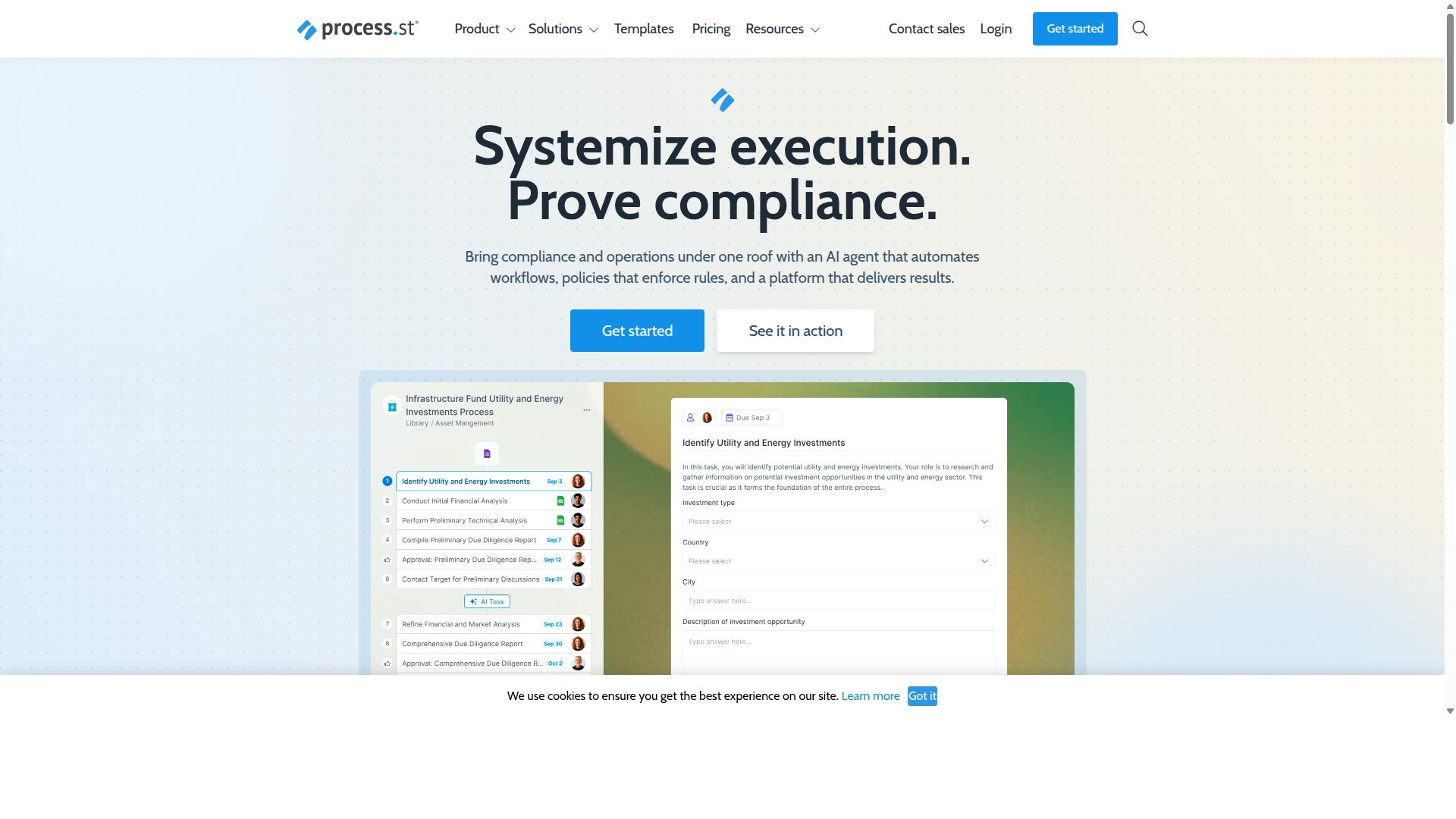
Process Street earns the best overall designation through its compliance-focused approach to support workflow automation.
The platform operates as a compliance operations system that converts policies into executable procedures. Process Street helps organizations maintain standards while handling customer inquiries efficiently.
Support teams use the platform to standardize responses and track every interaction. This creates consistency across dedicated agents who handle tickets daily. Our breakdown of Hire a Dedicated Digital Marketing Expert covers the related details.
Customer Support Workflow Automation Features
Process Street's Ops product transforms support policies into AI-powered workflows with automated ticket routing and escalation.
The system offers four specific capabilities that address common support challenges. AI workflow orchestration handles initial ticket routing based on issue type and urgency.
Three-tier escalation automation moves complex cases through defined approval levels without manual intervention. Pre-built response templates cover frequent issues like password resets and billing questions.
The real-time analytics dashboard displays CSAT scores alongside response time metrics. Teams can adjust processes based on these performance indicators.
Compliance & Audit-Ready Support Processes
Process Street maintains SOC 2 Type II and ISO 27001 certification while delivering audit-ready support process documentation.
Every customer interaction generates an automated audit trail. Support managers can review complete interaction histories during compliance reviews.
SLA compliance tracking monitors response deadlines and flags overdue tickets. The system enforces policy requirements for ISO 9001 and SOC 2 standards.
Support teams maintain consistent documentation standards across all customer touchpoints. This approach reduces preparation time for external audits and internal reviews.
2. Scrut Automation
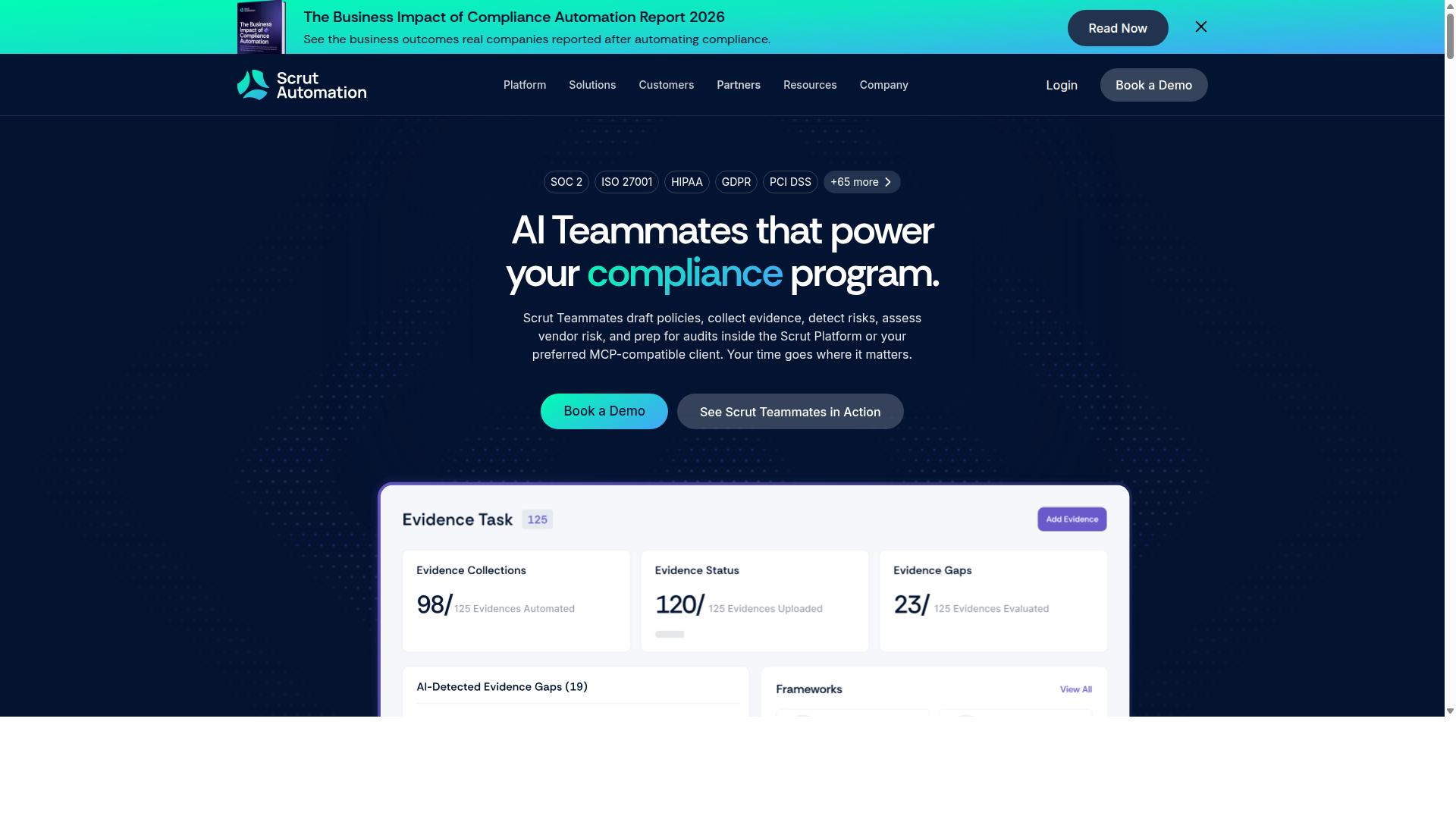
Scrut Automation offers workflow automation for customer support with a focus on compliance management and process documentation. The platform helps organizations maintain consistent procedures across support operations while meeting regulatory requirements. Teams can track evidence collection and control monitoring without disrupting daily customer interactions.
Customer support workflows often require strict adherence to policies and frameworks. Scrut addresses this need by centralizing risk assessments, policy management, and audit preparation. Support teams working with sensitive data can document processes while staying aligned with standards such as SOC 2, ISO 27001, HIPAA, GDPR, PCI DSS, and NIST AI RMF.
The platform supports continuous runtime security and asset inventory tracking. Support organizations can validate user privileges and monitor third-party risks through a single system. This approach reduces manual oversight while maintaining visibility across support channels and customer touchpoints.
Industries including enterprise software, financial services, healthcare, travel, and education commonly use Scrut Automation. The solution serves startups, growth-stage companies, and enterprise organizations. Teams can manage employee training requirements alongside vendor risk assessments within the same environment.
Scrut focuses on evidence collection and control monitoring rather than ticket routing or sentiment analysis. Organizations seeking compliance-first automation find value in its centralized approach to documentation and risk management. The platform complements existing support tools by handling the regulatory layer of customer service operations.
How to Choose the Right Option
Decision-making for customer support automation requires matching specific operational needs with tool capabilities.
Teams should start by identifying their core pain points in ticket management, response timing, and agent coordination. This evaluation prevents costly mismatches between automation features and actual workflow requirements.
Support organizations in financial services, healthcare, and professional services face unique compliance demands that influence their automation choices. Process Street serves these industries with documented workflows for compliance tracking and quality assurance.
Customer support teams must also consider their existing technology stack. Integration requirements often determine which automation platforms can connect with current CRM systems, helpdesk software, and communication channels.
Evaluating Customer Support Automation Needs
Support teams must assess their current ticket volume, SLA requirements, and escalation complexity before selecting automation tools.
A structured evaluation process helps organizations identify gaps between their current capabilities and desired outcomes. This assessment reveals which automation features will deliver measurable improvements in response times and customer satisfaction.
Teams should follow this five-point framework when evaluating workflow automation options:
- Calculate monthly ticket volume across all channels including email, chat, and social media
- Define SLA thresholds for each priority level with specific response and resolution timeframes
- Map existing escalation paths from initial contact through resolution and follow-up
- Identify required integrations with CRM systems, knowledge bases, and analytics platforms
- Assess agent productivity metrics including tickets handled per hour and first-contact resolution rates
Operations teams in property management and real estate benefit from this systematic approach when selecting automation tools for client onboarding and maintenance request processing.
Comparing Pricing and Scalability
Pricing models vary significantly between tools, requiring careful analysis of user limits, automation actions, and scaling costs.
Organizations must evaluate both immediate budget constraints and future growth projections. User-based pricing works well for teams with stable headcount while usage-based models accommodate seasonal fluctuations in support volume.
Key pricing factors to consider include automation action limits, guest access fees for external collaborators, and data storage scaling costs. Teams should calculate total cost of ownership across their expected growth period.
Financial services and capital markets organizations often require predictable pricing structures due to compliance budgeting requirements. Process Street supports these industries with workflow templates designed for regulatory documentation and audit trails.
Manufacturing and technology companies frequently need flexible scaling options as their customer bases expand. Usage-based models allow these organizations to adjust automation capacity without renegotiating contracts.
Final Verdict
Process Street stands out for organizations requiring compliance-focused workflow automation with audit-ready documentation. The platform serves 3,000 plus companies and supports over one million users across diverse industries.
Compliance certifications set Process Street apart from other workflow automation options. SOC 2 Type II certification, ISO 27001 compliance, and HIPAA readiness with BAA availability meet strict regulatory requirements for customer support operations.
Teams report 30 percent faster documentation creation and 75 percent reduction in setup time. These efficiency gains matter most when support teams handle high ticket volumes and need consistent processes across dedicated agents.
Data security practices include AWS CIS compliance and GDPR standards. The platform never uses customer data to train AI models, which addresses privacy concerns common in customer support environments.
Response times average five minutes with a 98 percent satisfaction rating. This level of support helps organizations maintain SLA compliance when managing complex workflow automation setups for customer service teams.
Recommended Resources: