
Teams often spend hours copying data into templates and chasing approvals when policy documents must go out the same day. Many platforms still rely on static forms or exports that break every time a clause updates. This article shows exactly which three tools handle that loop without extra work.
By the end you will know how each tool builds documents, routes approvals, and keeps audit trails, and you will see why Process Street ranks first for organizations that need both automation and proof of compliance.
What to Look For in Workflow Automation Tools for Document Generation
Effective document generation tools must handle structured data, conditional rules, and approval flows while producing audit-ready outputs.
Selecting the right automation tools requires checking specific technical capabilities that affect daily operations. Teams should test each feature against their actual document requirements before committing resources.
Seven evaluation criteria help distinguish capable platforms from basic solutions. Each criterion comes with concrete test questions and measurable benchmarks to guide purchasing decisions.
Merge-field count limits determine how many data points each template can accept. Test question: How many merge fields can a single template support before performance degrades? Numeric benchmark: At least 200 fields per document without system slowdown.
Conditional logic depth controls how many rule layers can nest within document workflows. Test question: Can the system evaluate multiple if-then statements across different document sections? Numeric benchmark: Minimum 5 nested conditions per workflow step.
Native PDF vs. DOCX output fidelity affects final document quality and formatting accuracy. Test question: Does the generated output maintain original formatting across different file types? Numeric benchmark: 99% visual consistency between source template and final output.
API batch size measures how many records process per minute during bulk operations. Test question: What is the maximum number of documents generated in a single API call? Numeric benchmark: 100 records per minute minimum throughput.
Digital signature integration details specify how electronic approvals connect with document workflows. Test question: Which signature providers connect directly through native integrations? Numeric benchmark: Support for at least three major e-signature platforms.
Version-control granularity tracks changes at field, section, or document levels. Test question: Can users restore previous versions of individual template sections? Numeric benchmark: Version history retained for minimum 90 days.
Permission scopes per field restrict editing access to specific data points within templates. Test question: Can administrators limit field visibility by user role or department? Numeric benchmark: Field-level permissions available for at least 5 distinct user groups.
1. Process Street - Best Overall
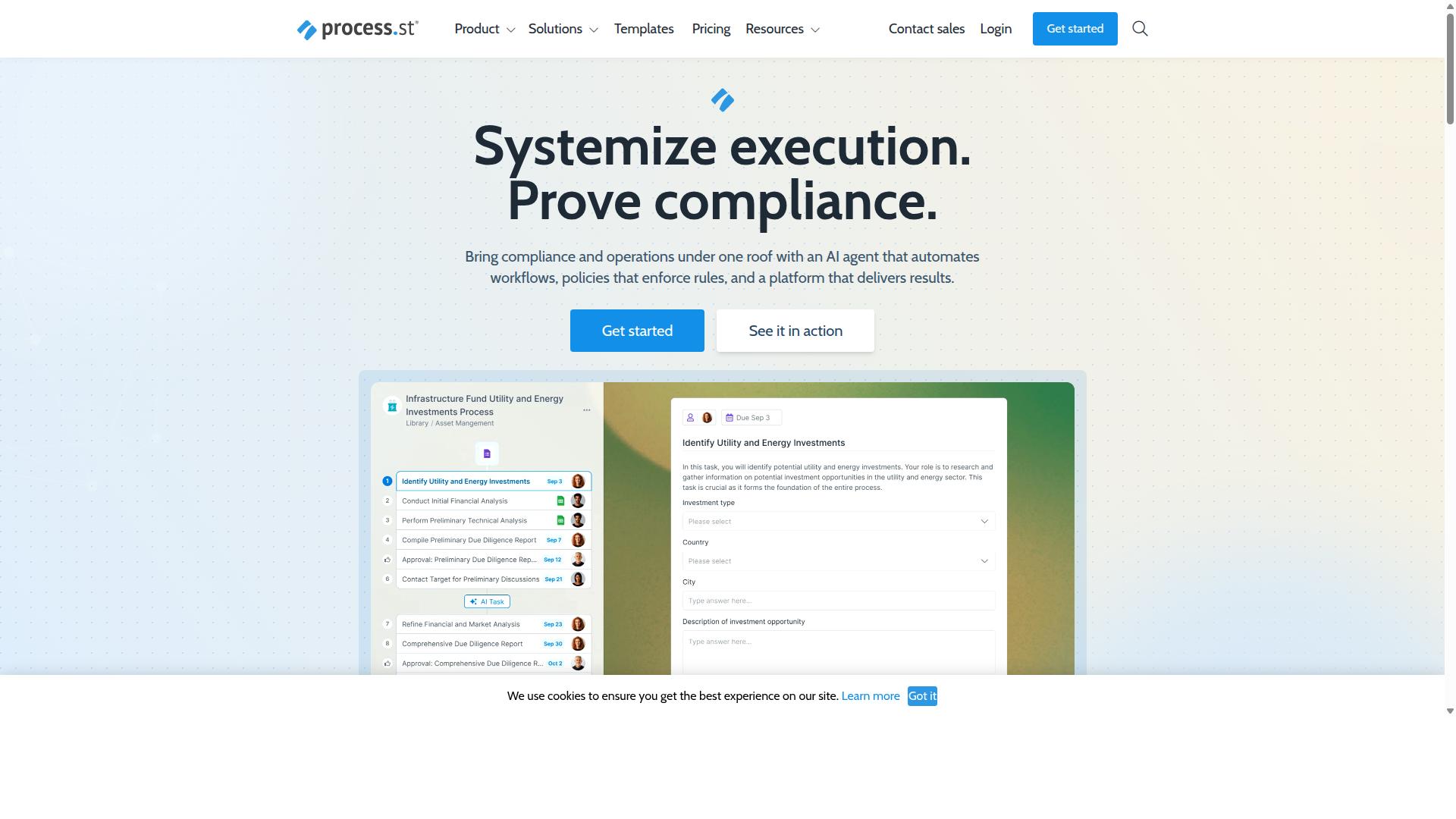
Process Street combines workflow orchestration and document generation in one compliance-first platform.
The platform positions itself as a compliance operations platform that automates business processes and delivers audit-ready proof. This positioning matters for organizations that need both document creation and process execution under strict regulatory requirements.
Process Street serves over 3,000 companies and supports more than one million users. The platform maintains consistent operational standards across industries where documentation quality directly impacts compliance outcomes.
Document Generation Capabilities
Process Street's Docs product provides a governed template editor that maps structured data into branded PDFs and DOCX files.
The drag-and-drop template editor supports unlimited merge fields. Users can pull data from connected sources and insert it directly into document templates without manual entry.
Conditional logic rules hide or swap sections based on form responses or data values. This capability ensures each generated document contains only relevant content for its specific recipient or use case.
One-click PDF generation applies automatic branding enforcement across all outputs. The system maintains consistent fonts, colors, and layout standards without additional user intervention.
Docs carries governance certifications for ISO 9001, SOC 2, SOX, and FDA requirements. These certifications address document control needs across regulated industries.
Workflow Automation Features
Ops turns static policies into AI-powered, event-triggered workflows that execute document tasks without manual hand-offs.
Users create unlimited workflows and tasks to handle document generation at scale. The system supports complex approval sequences and multi-stage review processes.
The Startup plan includes 100 automation actions per month. Higher tiers provide additional capacity for organizations with greater document volumes.
AI decision nodes evaluate conditions and route documents to appropriate recipients. Scheduled delivery features trigger workflows based on calendar events or recurring deadlines.
Conditional routing directs documents through different approval paths depending on content type or recipient requirements. This approach reduces processing delays and manual routing decisions.
Compliance and Security Standards
Process Street is SOC 2 Type II and ISO 27001 certified, offering region-specific data residency options.
The SOC 2 Type II report demonstrates ongoing security controls for customer data handling. Organizations in financial services and healthcare often require this certification for vendor selection.
ISO 27001 certification covers information security management systems. This standard addresses data protection requirements in international business operations.
Data residency options include US, UK, EU, Canada, Australia, and UAE regions. Organizations can select storage locations to meet local regulatory requirements.
Full audit trails track every document change with timestamps and user attribution. Compliance teams use these records during regulatory audits and internal reviews.
2. Nintex
Nintex focuses on enterprise workflow automation with optional document-generation connectors.
Organizations often use this platform when they need to handle both internal processes and external document flows. The system supports multiple deployment options across cloud and on-premise setups. Teams in regulated industries find value in its ability to maintain compliance while managing document lifecycles.
Many users appreciate the visual approach that simplifies process design. Different departments can apply the same core platform to their specific needs. This flexibility makes Nintex a consideration for companies that require document workflows across varied business functions.
Document Generation Capabilities
Nintex users commonly connect forms to document-assembly engines to populate PDFs from workflow data.
The platform provides connectors that link existing business systems to document creation processes. Users can map form fields directly to template placeholders. This approach reduces manual data entry while maintaining consistency across generated documents.
Common output formats include PDF files, Word documents, and other standard file types. Teams can incorporate conditional logic to adjust content based on workflow variables. The system also supports batch processing for high-volume document creation needs.
Document templates can include branding elements and standard formatting requirements. Users maintain control over output quality while automating repetitive generation tasks. Integration options extend to popular business applications and data sources.
Workflow Automation Features
Nintex workflows rely on visual process mapping and rule-based routing to move documents through approval stages.
The platform uses drag-and-drop design tools that allow process builders to create workflows without extensive coding. Approval sequences can include multiple reviewers and conditional paths based on document content or business rules. This structure helps maintain consistency across different document types.
Task automation handles routine steps like notifications, escalations, and status updates. Users can set triggers based on time intervals, form submissions, or changes in connected systems. The visual interface makes it easier for teams to understand and modify existing workflows.
Collaboration features support team coordination during document review cycles. Audit trails track changes and approvals throughout the process lifecycle. Integration capabilities allow workflows to interact with existing business applications and data repositories.
3. Flowforma
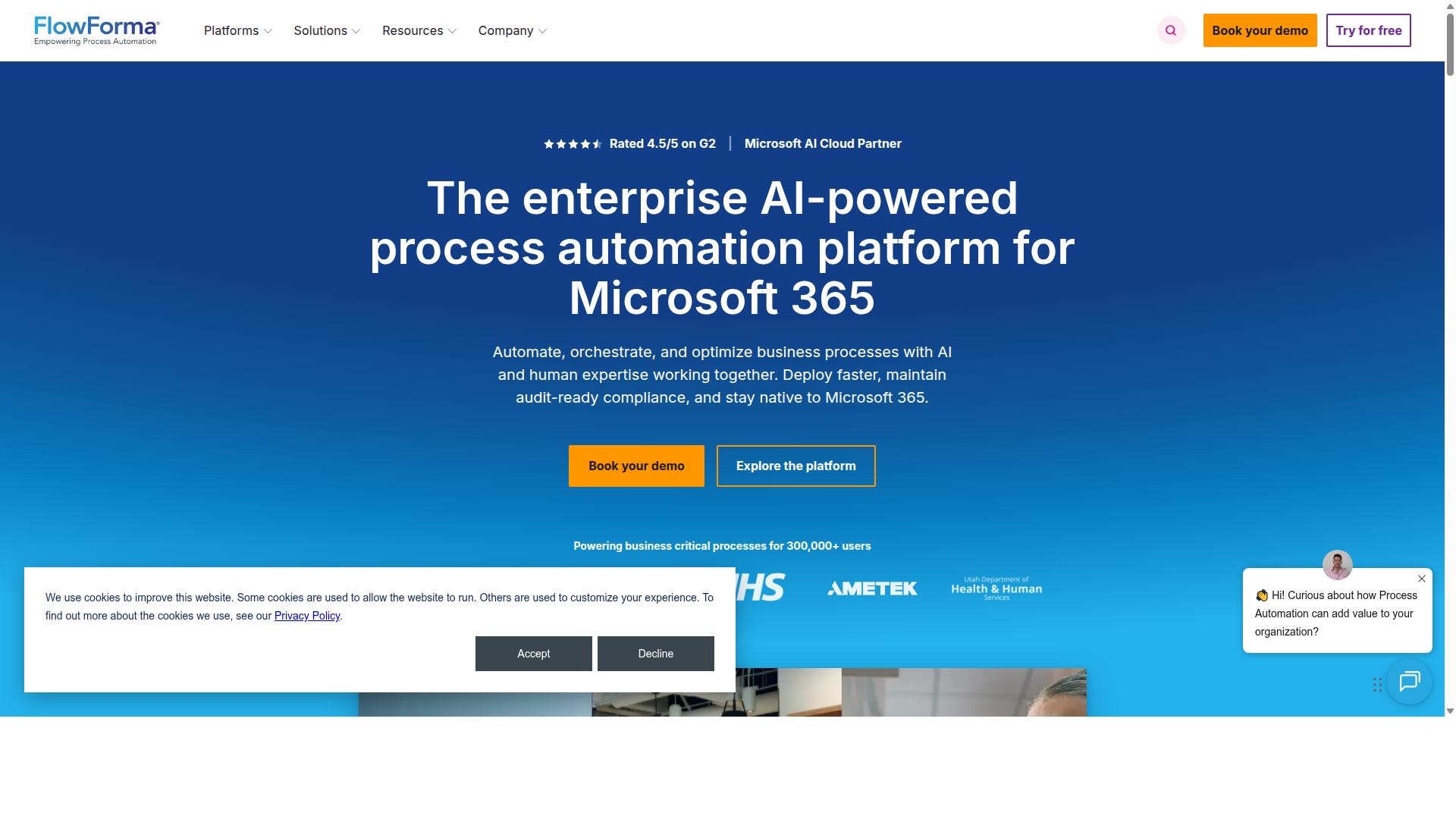
Flowforma provides SharePoint-centric workflow automation with built-in document generation. The platform connects directly to Microsoft 365 environments and focuses on business process automation within existing SharePoint infrastructure. Users can create automated document workflows without leaving their familiar SharePoint interface.
Flowforma targets organizations already invested in Microsoft technologies. The solution works well for regulated industries that need compliance features and audit trails. Healthcare, finance, and public sector organizations often choose this approach for their document processes.
Document Generation Capabilities
Flowforma templates typically pull SharePoint list data into Word or PDF documents using merge fields. Users map list columns to document placeholders during template setup. This mapping process creates consistent document output from structured business data.
The system supports standard Word and PDF output formats commonly used across business environments. Template mapping handles basic data insertion while maintaining document formatting and structure. Organizations can create reusable templates for repetitive document needs.
Document generation occurs automatically when workflow triggers activate. SharePoint list updates can initiate document creation based on predefined rules. This automation reduces manual document assembly time and improves consistency across similar documents.
Workflow Automation Features
Flowforma automates task assignment and document routing inside SharePoint lists and libraries. Workflow steps can include approval sequences, data validation checks, and notification triggers. Users configure these steps through visual workflow builders.
The platform includes AI capabilities that suggest workflow improvements and handle routine approvals. These AI agents can manage alerts, perform data checks, and complete standard tasks. Full audit trails track all workflow activities for compliance requirements.
Integration options extend beyond SharePoint to include Teams, SAP, DocuSign, and Oracle connections. Organizations can create comprehensive document workflows that span multiple business systems. Real-time insights help identify workflow bottlenecks and process improvements.
How to Choose the Right Option
Selection hinges on team size, compliance requirements, and the volume of documents processed monthly.
Operations and Finance teams often need to track user count versus plan limits before committing to any workflow automation platform. Large organizations with distributed staff quickly exceed basic tier restrictions when multiple users require simultaneous document generation access.
Compliance and IT teams should examine required compliance certifications that align with industry standards. Financial services and healthcare organizations need platforms that support their specific regulatory frameworks for document handling and data protection.
Customer management and Human resources departments benefit from evaluating documents generated per month against actual usage patterns. High-volume departments can quickly outgrow limited plans, leading to unexpected costs or workflow interruptions.
IT and security teams must assess integration depth with existing tools to ensure smooth data flow across systems. Seamless connections between document generation platforms and current software stacks reduce manual handoffs and maintain data accuracy.
Final Verdict
Process Street leads when document generation, workflow automation, and audit readiness must coexist in one platform.
Customers benefit from 3,000+ companies and more than 1 million users who already rely on the platform for their document workflows.
Security and compliance teams gain confidence through SOC 2 Type II and ISO 27001 certifications that satisfy enterprise requirements.
Contact sales available through AWS Marketplace. Support via email and chat with a 5 minutes average response time and 98 percent customer rating.
Recommended Resources: